
Imagine banking fading into the background.
Not disappearing. Just becoming invisible.
You open an app. Money moves. Accounts exist. Cards work. Compliance is handled. Nobody talks about "the bank." It just works. That's the quiet promise behind Banking as a Service, or BaaS. And if you are a founder or a finance lead at a crypto company, Web3 project, or global merchant, it's probably already shaping your roadmap whether you've named it or not.
BaaS isn't a trend you pitch to investors. It's plumbing. And good plumbing only gets noticed when it's missing.
The reason it matters now is simple. Users expect financial features to be native. Not bolted on. Not redirected to a third party. Native. And building that yourself, from licenses to compliance to core banking, is slow, expensive, and usually unrealistic.
So companies stopped trying to become banks.
They started embedding them.
What Banking as a Service really is
At its core, Banking as a Service is a model where licensed banks expose parts of their infrastructure through APIs, and other companies build on top of that infrastructure under their own brand.
That's it.
No magic. No buzzwords. Just regulated banking functions made programmable.
Through BaaS, a non-bank can offer things like accounts, payments, cards, lending, or wallets inside its own product. The licenses, balance sheets, and regulatory obligations stay with the banking partner. The experience stays with you.
This separation matters. It's what lets a startup move at software speed inside a heavily regulated industry.
And yes, APIs are the enabler. But the real value is not technical. It's structural.
BaaS turns banking from a destination into a component.
A quick step back: how we got here

Online banking didn't start as BaaS.
In the late 1990s and early 2000s, banks simply mirrored branch functions on websites. Check your balance. Move money. Download a statement. That was "digital."
The real shift came later, when fintech companies realized something uncomfortable for incumbents. Most people don't want a relationship with a bank. They want outcomes. Pay someone. Get paid. Borrow. Save. Done.
Neobanks pushed this idea further by designing around the user first and the institution second. Mobile-first, API-first, brand-first. Under the hood, many still relied on traditional banks. They just didn't make that obvious.
Then regulation caught up. Open banking frameworks in Europe forced banks to expose data and functionality via APIs. That cracked the door open. Infrastructure providers stepped in. And BaaS became a category instead of a workaround.
Today, banks, fintechs, and platforms coexist in layered stacks. One provides the license. One provides the tech. One owns the customer.
That layering is not accidental. It's the model.
How BaaS APIs actually work in practice
APIs are often described like Lego blocks. That analogy is overused, but it's still accurate.
A BaaS API exposes a specific function. Create an account. Issue a card. Initiate a transfer. Run KYC. Each function is isolated, documented, versioned, and secured.
When you integrate, you're not building a bank. You're orchestrating banking components.
Here's what that looks like operationally.
You build your product and user flows. When a user signs up, your system calls an onboarding API. The BaaS provider handles identity checks, sanctions screening, and account creation. When a payment happens, your system triggers a payment API. Settlement, reconciliation, and reporting are handled downstream.
From your user's perspective, everything happens inside your app. From a regulator's perspective, the licensed entity is still accountable.
That duality is the entire point.
Why APIs matter more than licenses
Licenses are slow. APIs are fast.
That doesn't mean regulation is optional. It means it's abstracted.
With BaaS, compliance becomes an infrastructure concern instead of a company-ending distraction. AML, KYC, transaction monitoring, data protection. These are not trivial problems. They're ongoing obligations. BaaS providers live in that world full-time so you don't have to.
This is especially relevant for crypto and Web3 companies.
Stablecoin-friendly accounts. On and off-ramps. Cross-border payouts. These are areas where regulatory expectations shift quickly. An API-driven model lets you adapt without rebuilding your legal foundation every six months.
Speed matters. But survivability matters more.
The real benefits, without the hype
People often oversell BaaS. Let's keep it grounded.
Faster time to market
You can launch financial features in months instead of years. Sometimes weeks. That's not because the tech is simpler. It's because the hardest parts are already done.
Lower operational drag
You don't need an in-house compliance department on day one. Or a payments operations team to reconcile failures manually. The provider absorbs that complexity.
Focus on your actual business
This is underrated. Most companies don't win because of banking features. They win because of distribution, product insight, or community. BaaS lets you add finance without becoming finance.
Revenue that fits your product
Payments, interchange, lending margins. These can become meaningful revenue lines. But more importantly, they align with how users already behave in your ecosystem.
Different kinds of BaaS providers and why it matters
Not all BaaS is the same. The model you choose shapes your constraints.
Direct bank partnerships
Some companies integrate directly with a licensed bank. This offers control and flexibility, but also responsibility. You manage more relationships. You coordinate more changes. This tends to suit larger platforms with specific needs.
Aggregator models
Aggregators sit between you and multiple banks. One integration. Many capabilities. Less control, less overhead. For many startups, this is the most practical entry point.
Full-stack providers
These providers bundle accounts, payments, cards, and compliance into a single platform. They are opinionated by design. You trade customization for speed and simplicity. If you want to launch quickly and iterate later, this can be the right call.
There's no universally correct choice. There's only fit.
Core features you should actually care about
Forget feature checklists for a moment. Ask better questions.
Can you open accounts in the regions you care about?
Can funds move where your users need them to move?
Can you support stablecoins without workarounds?
Can you scale volume without renegotiating everything?
Underneath those questions sit the usual components.
Account infrastructure. Payments rails. Card issuing. FX. Compliance tooling. Reporting. Support.
But the difference between a usable BaaS platform and a painful one often comes down to how predictable it is. Clear docs. Stable APIs. Honest limitations.
That's not marketing. That's lived experience.
Embedded finance in the real world
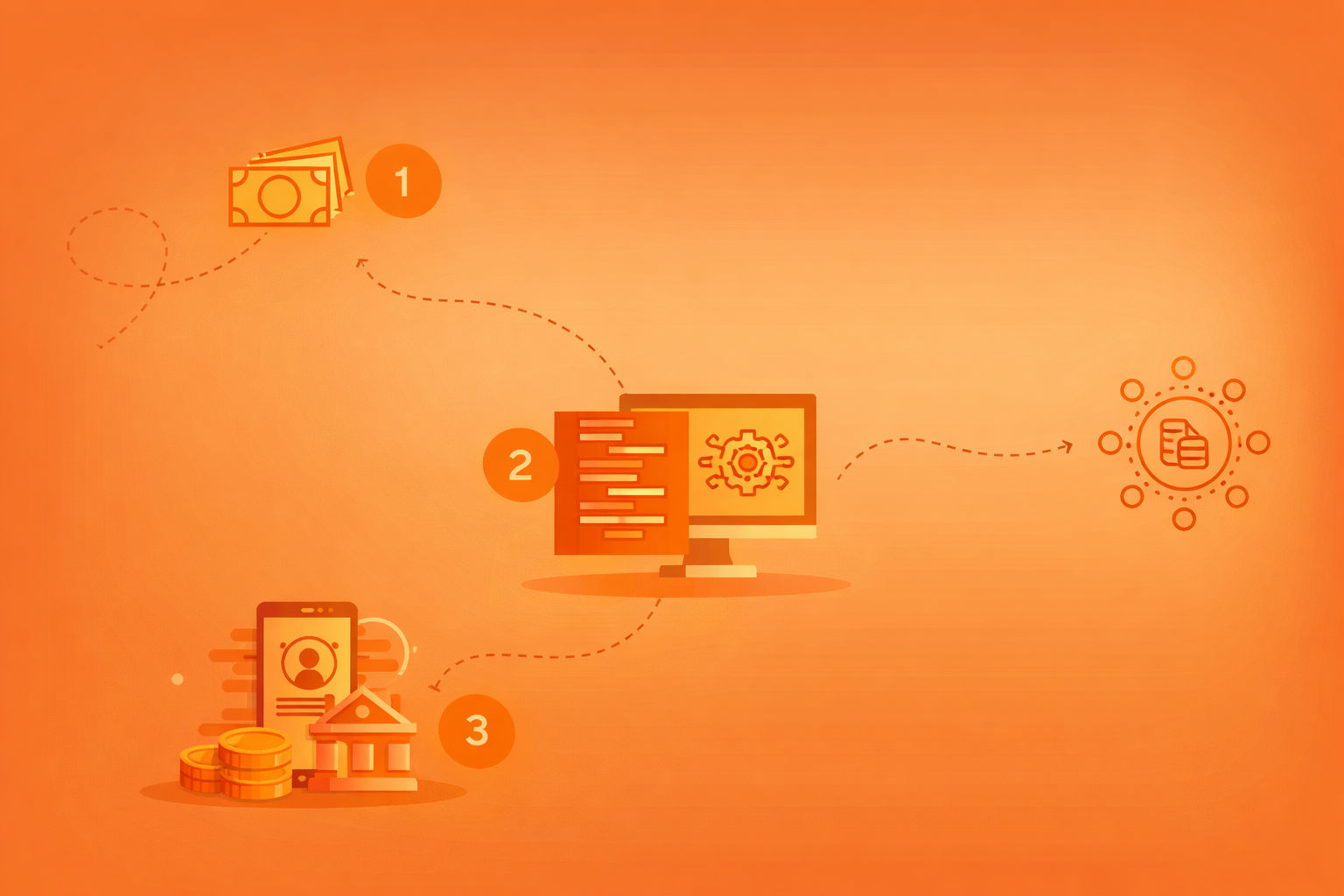
Embedded finance is just BaaS applied thoughtfully.
When a marketplace lets sellers hold balances, that's embedded banking.
When a platform offers instant payouts, that's embedded payments.
When checkout includes financing, that's embedded lending.
Users don't think in categories. They think in moments. BaaS lets you meet them there.
And this is where crypto companies have an edge.
You already operate globally. You already think in wallets. You already deal with multiple assets. Traditional banking infrastructure is often the missing bridge, not the core.
Why BaaS matters specifically for crypto and Web3 companies
Crypto firms hit friction early.
Bank accounts get closed. Payments get delayed. Jurisdictions get complicated. BaaS doesn't solve all of that, but it gives you structure.
Stablecoin-friendly banking is a good example. Many traditional banks still struggle with it. BaaS providers who understand crypto risk models can offer accounts designed for that reality instead of fighting it.
For Web3 projects, BaaS can turn tokens into usable infrastructure. Payroll. Treasury management. Fiat access for users who don't want to touch exchanges.
For global merchants, it means settling in one place while selling everywhere.
This is not theoretical. It's already happening quietly.
The market trajectory, without the spreadsheets
Yes, the BaaS market is growing. The numbers get quoted often. Tens of billions. Double-digit growth.
What matters more is why.
People expect money to move like messages. Instantly. Globally. Inside the products they already use. Banks alone cannot meet that expectation. Platforms alone cannot meet regulatory requirements.
BaaS exists because that gap is permanent.
As regulation tightens, not loosens, the need for specialized infrastructure increases. Ironically, more rules often make abstraction more valuable, not less.
Choosing a BaaS provider without regrets
This is where many teams get stuck.
Don't start with features. Start with risk tolerance.
How much regulatory exposure are you willing to carry?
How many geographies matter in the next two years, not five?
How opinionated do you want the infrastructure to be?
Then look at basics.
Compliance posture. Transparency. Support quality. Roadmap honesty.
If a provider promises everything, be careful. If they clearly state what they don't support yet, that's usually a better sign.
And talk to customers. Quietly, if possible.
The part nobody tells you
Banking as a Service is not a shortcut to becoming a bank.
It's a way to avoid becoming one.
The best BaaS implementations feel boring. Money moves. Reports reconcile. Audits pass. Users don't complain. Your team focuses on building what actually differentiates you.
If you're a founder or finance manager evaluating banking infrastructure today, that's the benchmark.
Not hype. Not slides. Not buzzwords.
Just: does it work, and will it still work when you grow?
That's the real power of Banking as a Service.